
Like most human conduct, individuals’ transfer conduct out in the open spots is unpredictable. Facts from sociology investigate demonstrates that what individuals do with their undesirable stuff is the result of four distinct groups of variables. We examine every one of these variables considerably.
- Care of place – Factors that impact individuals’ view of how tended to a place looks.
- Responsibility factors that impact individuals’ awareness of other’s expectations in taking care of a place.
- Punishments and rewards that impact transfer conduct inspiration.
- Individual factors that include individuals’ personal convictions, perspectives, propensities and inclinations.
- Wildcard factors
These variables impact individuals’ conduct despite the fact that they might be totally unconscious of them. They work powerfully and reliantly and rely upon the setting in which they happen, making them somewhat like the climate. Think about each impact as a kind of wind. Every blast will blow with a specific power and bearing, inspiring a specific conduct, for a specific individual, in a specific place, at a specific time. While we can’t anticipate with sureness precisely what force and wind bearing will be required to deliver any individual activity, we know enough about their general qualities to figure how they’re probably going to impact a group of people’s conduct.
Care of Place
The more nurtured a place looks, the more probable we are to change our activities to enable it to remain as such.
 Social Norms: Human beings look to others to recognize what esteems, convictions, mentalities and conduct are socially adequate or unsuitable. After some time, if enough individuals share them, they wind up unwritten social standards or social norms. This determined human want to fit in with others implies that what we think others are doing turns into a solid guide for what we see is anticipated from us in open places. Certain highlights of a place go about as ‘signals’ for what the normal conduct is, so in a spotless place, the absence of litter is a solid flag that littering isn’t satisfactory and, harmonious with the generally acknowledged standard that individuals should tidy up after themselves, they’re probably not going to litter.
 Physical Features – Mediators for Social Norms: One of the key results of our behavioral research that is additionally been built up by numerous different researchers is that ‘perfect equivalents clean’. The cleaner a place is, the less individuals are probably going to litter there. Physical highlights of a place, like receptacles, additionally send solid signs to individuals about what the normal conduct in a place is. However, maybe less apparent is that this ‘flagging’ reaches out to other physical foundation like clearing, seats, play gear, doors, plants and finishing for instance. The physical highlights of a place don’t specifically impact conduct yet are negotiators for social standards, that is, individuals impute certain social implications to them (either deliberately or unwittingly) and after that demonstration appropriately.
Responsibility Factors
Individuals differ with respect to who they consider is mindful to care for an open place and what they await from others. They exist along a continuum where toward one side of the scale, another person (like nearby government) is viewed as mindful and at the other, just the general population who utilize the place.
Social Compact
 A view that is normally held is that individuals from the group of people are responsible for littering however it’s the board’s duty to tidy it up. Thus, open place supervisors themselves are continually endeavoring to build the awareness of other’s expectations felt by the group in tending to their open places and keeping them clean. This common feeling of shared obligation is known as the social minimized, an implicit assertion that on the off chance that you do your bit I’ll do mine.
Feeling of Community: The primal need to associate with others reaches out to how we identify with our surroundings out in the open spots. Something other than commonality, a great open place mirrors a feeling of minding and welcome, regardless of whether it’s a bustling energetic shopping center point or a calmer place of examination. It feels great to be in places like these and we’re frequently liable to allude to them as having a ‘decent feeling of group’. On the off chance that enough individuals have these affections for a place, a solid feeling of shared proprietorship will create, with individuals paying special mind to both the place and each other. This sentiment inclusion and connection prompts a feeling of shared obligation to care for the place, with littering and harm far less inclined to happen.
Penalties and Rewards
 Most places on the planet have an arrangement of punishments set up for littering, which manage the issue sometime later. By punishing somebody for littering, you’re trusting that they’re less inclined to do it later on. You’re additionally expecting however, that the minor danger of a punishment will be sufficient to deflect individuals from littering in any case.
You can likewise compensate individuals for good conduct. Individuals ‘discovered’ making the best decision might be given prizes like shopping vouchers from neighborhood organizations and their positive transfer conduct advertised in the media to urge others to make the best choice. A few spots have likewise attempted to make the undertaking of receptacle utilize itself fulfilling or ‘fulfilling’ by utilizing diversions, play and intriguing commotions when somebody utilizes the receptacle.
Individual Factors
 People’s individual convictions, individual propensities and inclinations likewise impact their conduct.
What I Do Doesn’t Really Matter: How much somebody trusts that a circumstance is controllable can impact what they do with their utilized stuff. This level of apparent control might be very low for a few people who trust that there’s no point placing something in the receptacle ‘since I’m just a single individual and what I do won’t have any effect’. Interestingly, some observe their individual activities as a critical piece of the entire, attempt never to litter and may even get other individuals’ stuff since they trust their illustration will rouse others to do likewise.
Be that as it may, I Didn’t Put It There: Generally, individuals are not slanted to get litter that they didn’t drop themselves. We’ve watched numerous individuals out in the open spots who’ll stroll around litter that is in their route, as opposed to lift it up. Obviously, a few people feel a solid obligation to ‘reestablish harm’ done by others since they feel a more extensive awareness of other’s expectations to the more extensive group, to who and what is to come or different species or the entire planet at large.
 Individuals’ World View: At the more outrageous finishes of the transfer conduct continuum are the individuals who have central convictions about how they see the world when all is said in done. There are the individuals who show an all the more independently arranged ‘world view’ where they consider their rights as an individual are principal and that the world, generally, should fit in with them. Conversely, others have extremely benevolent convictions and feel they have an obligation to settle the harm done by others for the advantage of the group overall, including who and what is to come.
Inaccurate Beliefs: There are convictions that individuals hold that are essentially off-base. For instance, some trust that cigarette butts will rapidly separate in the earth or that biodegradable things aren’t generally litter and corrupt significantly more rapidly than they really do. Furthermore, in some cases, individuals essentially don’t comprehend the issue or its results, for instance, not understanding that litter is helped through storm water to the ocean where it can murder natural life and dirty the water.
The Ick Factor: Researches on environmental conduct demonstrate that pictures that are striking or simple to envision or review are more accessible to memory and are allocated more significance. On the off chance that you can consider it, it must be essential. On the off chance that it inspires a solid feeling it must be vital, for instance, c ‘I’m not placing this in the canister since I should touch it, it’s dingy!’ With things like crisp biting gum, spilt takeaway sustenance and pooch crap, the general sense that a large portion of us have is that they’re, well … yuck. Also, we would be hesitant to lift them up, or even to lift the top of an extremely yucky canister to put something inside.
 Propensity: Individuals may routinely litter certain things through propensity. Since they’ve rehashed a specific conduct hundreds if not a huge number of times, it’s been rationally fortified to the point where they don’t see they’re doing it. Through reiteration, these oblivious practices move toward becoming engraved in the individual’s neural pathways and are so dug in they’re exceptionally impervious to change. Ceremonies around smoking (counting the way individuals discard butts) are exceptionally normal since they’ve been rehashed in a predictable setting so frequently. The biting of gum is likewise a very much dug in propensity for some individuals, similar to its transfer on the trail, on the best or edge of containers, or under seats and tables.
Clashing inclinations: Everybody has numerous objectives, wants or inclinations, some of which may exceed others in significance or desperation. A want to keep a place clean may exceed a want not to need to endeavor to walk 30 meters to the canister, so the want for absence of exertion exceeds the want for a spotless domain, despite the fact that the two inclinations might be unequivocally held.
Clashing inclinations imply that by and by, individuals may not make the best decision, despite the fact that in principle they need to.
Wildcards
Our observational investigations plainly indicate is that transfer conduct can shift as per the sort of open place individuals are in and the kind of thing individuals are discarding.
 Kind of Place: Individuals have a tendency to be substantially more prone to litter in a few kinds of open place than others. They will probably litter in places like open transport stops (train, bus and cable car stops) and railroad easements. They are substantially less liable to litter in parks, at business sectors and outside open structures and landmarks contrasted with other open spots like shopping strips, shopping centers, shorelines and waterfront regions. These distinctions aren’t ‘rules’ however propensities. There are frequently area particular purposes behind these distinctions. At a bus stop for instance, individuals may not be permitted to eat food once on board the transport, thus they litter once it arrives. Since it’s basic for one receptacle to be situated at the passage to a long transport station zone (physical element of the place), this implies albeit a great many people would incline toward not to litter, this is exceeded by the risk of losing their place in line or passing up a great opportunity for a seat in the event that they set aside the opportunity to stroll back to the container (clashing inclination).
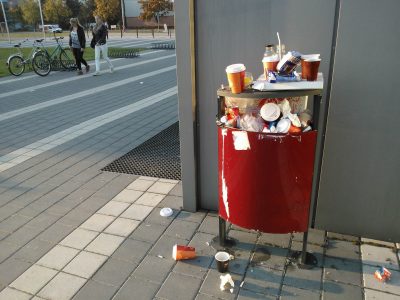 Kind of Item: Again and again in our activities, we observe cigarette butts to be the thing well on the way to be littered in a wide range of open place. Every single other thing discarded out in the open spots will probably be placed in the receptacle as opposed to littered. Our investigations of cigarette littering conduct demonstrate that where exceptional consideration has been paid to giving all around found butt transfer alternatives in perfect, very much looked after zones; butt littering rates can be divided. There are numerous different cases of the physical qualities of things impacting individuals’ transfer conduct. For instance, a thing might be little and hard to get if dropped, or exceptionally bundled in various layers and difficult to deal with (physical component of the thing) or thought of as natural and along these lines prone to separate effortlessly (erroneous individual conviction).
Lets build a green world today. Let us preserve the world for our future generation today!
Surf on…

Top 10 ways to bring recycling to the classroom
Who knew classrooms could be used as mediums to promote [...]

Why recycling is good for the environment/community
Do you know that the health of a community [...]

Health benefits of recycling
Do you know recycling directly affects your health? Although recycling [...]

E-Waste and Batteries
How to Recycle e-Waste Safely The world as we [...]

Environmental Benefits of Recycling
Recycling is a well-known process that we use to protect [...]

Why It is Important to Recycle and What Items Can be Recycled?
On which planet you want the coming generations to [...]









Leave A Comment